
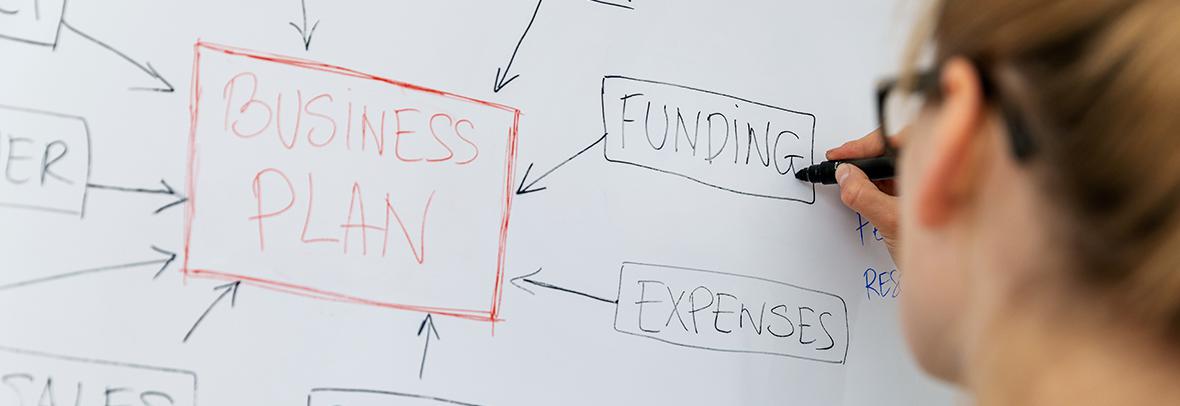
You’re already CEO. Are you running the business?
At the recent WIRE conference, Jamie Johnson told a roomful of agents that your real estate license is just the starting line—and that the real work is building a business that runs without you.
When Jamie Johnson took the stage for a fireside chat at this year’s Women in Real Estate Conference, she opened by asking for a show of hands. “How many CEOs are in the group?” she asked and followed that question by saying: Everyone’s hands should go up. “You are the executive of your business.”
That’s the moment Johnson built the whole conversation around, because the instant an agent gets licensed, they also become an executive—whether they’re ready to act like one or not.
Johnson understands. She spent her first two years in real estate as a top producer in a small Tennessee market before stepping away from the industry. When she came back to the U.S., she moved into association management—first as operations director for Greater Nashville Realtors®, then for nearly seven years as CEO of the Park City Board of Realtors® in Utah.
Today she runs her own consulting practice, coaching agents, brokers and associations, and helping boards fill leadership roles. Through every chapter, she told the audience, the objective and over-arching theme has been the same: Manage real estate as a business, not a transaction.
The 4 things that separate a job from a business
Johnson distilled business ownership down to four components, and she didn’t let the room off easy on any of them.
Mindset. Are you building an asset, or just chasing the next closing? “If you’re just chasing the transaction, you’re going to keep living paycheck to paycheck,” she said.
Brand. Your brand isn’t your logo—it’s your reputation, your consistency and whether people trust you to follow through. Do people like working with you? Would they refer you without hesitating?
Systems. If you can’t take a vacation, can’t go to the hospital, can’t take a break without your business stalling, you don’t have a business—you have a job with no boss to ask for time off. A real business runs on processes that don’t depend on you answering every call.
Relationships. Johnson called this her superpower, “the hill I will die on.” The connections built through associations, kids’ schools, churches, neighborhoods—that is the business, she argued. Treat them like background noise, and you’ll always be starting from zero.
Have a plan—even a rough one
Johnson’s advice for turning that mindset into action was almost defiantly simple: Open a spreadsheet. Decide how many transactions you want this year and what you want to earn, then work backward into a real plan instead of waiting to see what happens.
She drove the point home with a story from early in her career. As a new-member trainer in Park City—one of the most expensive ski markets in the country, where home prices can run into the millions—she’d tell new agents she’d been a “multimillion-dollar producer” in her first two years. Then she added the punchline: That was in a market with a median sale price of $150,000. The lesson wasn’t the dollar figure—it was that she had a calendar, a plan and a daily routine for getting in front of people, regardless of what the market looked like.
She also challenged the room on the elevator pitch. When someone asks what you do for a living, do you have a 20-second response that makes them remember you the next time they think about buying or selling? If a plumber, electrician or others in your network are thinking about buying or selling a house, will they remember how you described your business style—and will they choose you with that in mind?
Redefining balance
Asked about her own habits, Johnson says she’s up most mornings before
5 a.m. for prayer and meditation, a practice she picked up after reading “The 5 AM Club.” But the bigger point wasn’t the wake-up time. “You can’t give to others if you don’t first give to yourself, so you have to wake up in the morning and give yourself that time. Or, if your time’s another part of the day, I understand that. But really, the first fruits in the morning are where it is the sweetest.”
The goo moment
Johnson closed with an image she’d picked up from an “Animal Planet” TV-show segment about butterflies; and it landed as the kind of line a room remembers long after the slides are forgotten. Most people know the broad strokes of metamorphosis—caterpillar, cocoon, butterfly. What Johnson hadn’t realized until that morning was what happens inside the cocoon: The caterpillar doesn’t just change shape. It completely breaks down into a formless puddle before it transforms into something that can fly.
Her challenge to the room: How many of you need to admit you’re in the goo stage right now? Not failing—transforming. Take the break. Step back. Evaluate where you are before forcing yourself to come out the other side flying on autopilot.
It was a fitting bookend to a conversation that started with a hand-raise and a hard truth—that nobody hands you a business, you have to build one—and ended with permission to fall apart a little on the way to becoming something better.
Jamie Johnson led the Park City Board of Realtors® for nearly seven years and now consults with agents, brokers and associations across the country. This article was generated using Florida Realtors® automation and reviewed by an editor before publication.