
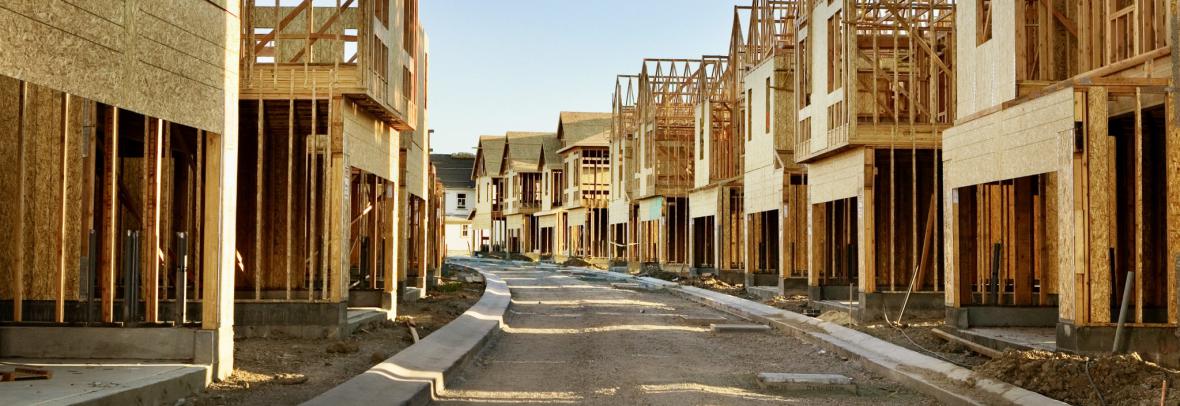
New federal housing law expands options in Florida
The ROAD to Housing Act will bring new tools for manufactured housing, local construction, financing and disaster recovery, with changes set to roll out over time.
Washington just handed Florida a bigger housing toolbox. Inside are new ways to build homes, finance buyers and help communities recover — but each tool comes with its own timeline.
The 21st Century ROAD to Housing Act became law July 11. Its 60 sections touch nearly every corner of federal housing policy, from manufactured homes and small mortgages to local construction grants and disaster recovery.
The law opens plenty of doors throughout the state, but federal rules, funding decisions and state and local action will determine when Florida markets can walk through them.
“The name of the game right now is implementation,” said Elayne Weiss, senior policy representative for federal housing at the National Association of Realtors®.
Manufactured housing could break the mold
One of the law’s most tangible changes updates the federal definition of manufactured housing to include homes that aren’t built on a permanent steel chassis — a change intended to encourage new designs and construction methods.
That could mean different layouts, multistory homes and designs that fit more easily into traditional neighborhoods. In turn, it could lower production costs, depending on how manufacturers use the new flexibility.
The Florida market is already substantial. Manufactured homes account for 8% of the state’s housing stock and roughly half or more of all homes in Glades, Dixie and Gilchrist counties. The share is nearly as high in Union and Suwannee counties.
Florida Realtors® data shows 8,206 manufactured homes sold during the first half of 2026, up 5% from a year earlier. The median sale price was $162,500.
More design flexibility could widen the choices available to buyers seeking a lower-cost home and add inventory in rural areas and communities that allow manufactured housing.
But chassisless homes aren’t rolling off Florida production lines yet.
The U.S. Department of Housing and Urban Development (HUD) must revise its regulations, and Florida law also includes chassis requirements that need to be changed, said John Ricco, CEO of the Florida Manufactured Housing Association. The group already has legislation largely drafted for the 2027 legislative session.
"It will spur some innovation in the way homes are constructed, as well as reduce costs for homeowners," Ricco said.
HUD had already proposed a narrower change allowing upper-floor sections of multistory manufactured homes to be built and transported without a permanent chassis. The June 12 proposal remains open for public comment through Aug. 11.
The new law goes further, but the change applies to future construction. It doesn’t call for removing chassis from homes already in place.
Existing dollars could build new homes
The law also frees up Community Development Block Grant (CDBG) money for new home construction, something those dollars generally couldn’t fund before. The result could be more entry-level homes, new construction on vacant or underused neighborhood lots and development in places where limited infrastructure has held building back.
FloridaCommerce already distributes between $18 million and $26 million in HUD funding each year through the state’s Small Cities CDBG program. The money currently supports home repairs, neighborhood infrastructure (water/sewer), commercial revitalization and economic development in eligible smaller cities and rural counties.
Weiss called the construction change one of her favorite provisions because it gives communities another way to use money they already receive.
“Now communities can be thinking about this as a new source of federal funding that they can use to address their housing supply shortage,” she said.
The effect will be local. Larger communities can direct their federal allocations toward housing, while eligible smaller cities and rural counties will compete for grants administered by FloridaCommerce.
Smaller mortgages could unlock sales
The law also opens the door to a HUD pilot program for Federal Housing Administration (FHA) loans of $100,000 or less. Small mortgages can be hard to find because lenders make less money on them even though they require much of the same work as larger loans.
The pilot program could help with lower-priced houses, rural properties and some manufactured homes — properties buyers may be able to afford but struggle to finance.
The practical effect will depend on which lenders participate and how federal and local housing programs carry out the changes. Congress also needs to fund the pilot program before it can get underway. As those details emerge, some transactions that don’t work under today’s financing options may have another path forward.
Other changes address manufactured-home financing, appraisals, VA loans and the federal HOME program, which helps states and communities build and preserve affordable housing.
A more predictable path after storms
The law’s reach doesn’t stop with buying and building. It also changes how disaster recovery could work after the next major storm.
Florida already uses Community Development Block Grant Disaster Recovery (CDBG-DR) money to repair homes, restore infrastructure and rebuild neighborhoods after storms and other natural disasters. The difference is that Congress has typically approved the money one disaster at a time, with HUD writing a new set of rules for each round.
The ROAD to Housing law authorizes the program for three years and creates a dedicated HUD office to run it. That could give Florida communities a more familiar playbook and help recovery efforts get moving sooner.
“Having a stable disaster recovery program is a good thing,” Weiss said. Clear, consistent rules, she added, could help the money reach families faster.
What happens next
Not every program in the law comes with money attached. Some grants and pilots still need congressional funding, while other changes require rules or guidance from HUD and other agencies.
The next developments will come from several directions:
- HUD rules will determine how manufacturers use the chassis flexibility and how new financing programs operate.
- Florida legislation is needed before chassisless manufactured homes can move forward under state law.
- Local CDBG decisions will determine whether communities direct existing dollars toward new housing.
- Lender participation will shape whether small-dollar mortgage changes reach buyers.
- Congressional funding will decide which newly authorized programs move beyond paper.
The law won’t produce one dramatic shift in Florida’s housing market. Its effect is more likely to show up through a series of smaller changes: another home built, another financing option opened and another deal that can move forward.
“We didn’t get into our housing crisis overnight, and we’re not going to solve it overnight,” Weiss said. “This is a really good step in the right direction, but it’s going to take some time.”
© 2026 Florida Realtors®